It’s November again, which means GitHub Game Off. Last year I built Grav-Sync in plain JavaScript; this year the theme is SHIFT and my entry is The Debugger 0x03: Wild Shift, a top-down boss rush made with Godot 4.7. You can follow it on itch.io, and this post is a mirror of the first devlog I published there.
The idea in one line: your weapon is a bit register. Shift it left or right mid-fight, and the two leftmost bits become your two action buttons. A present-day developer and their rubber duck get pulled into a fantasy RPG where the monsters are literal software bugs: Infinite Loop, Null Pointer and Segfault.
Day 1: making it run in the browser (Epic 1)
Before writing any gameplay, I wanted the boring stuff to work: a Godot 4.7 project that runs at a locked 60 Hz with pixel-perfect integer scaling, a web export that stays under 30 MB, and a CI pipeline that runs the tests on every pull request.
Then the shell of the game:
- a title screen with “press to start”, because browsers won’t play audio before your first input
- The Clearing, the arena, framed by an IDE-style HUD: register panel on the left, log panel at the bottom, line numbers down the edge
- the whole scene flow with placeholders (Title → Intro → Fight → Harvest → … → Ending)
- auto-pause when you switch tabs, so the boss doesn’t kill you while you read Slack
Days 2–3: the shift has to feel good (Epic 2)
The goal of Epic 2 was simple to say and hard to do: shifting should feel great in an empty arena, before there’s anything to fight.
- The register is a ring.
Qrotates it<<,Erotates it>>. It only contains the bits you own, so you can never end up in a dead state. The HUD also shows its byte value, so your build is literally0x03. - Shift juice: the register slides with a small overshoot bounce, a mechanical key-click (two different sounds for left and right), and your weapon inverts for 4 frames.
- ATTACK and DASH: a 3-hit slash chain and an 8-frame invulnerable dash.
- Ordered combos: the order matters.
[A, D](attack then dash) is Dash Strike,[D, A]is just a dash followed by a slash. - Hit feedback: hit-stop, glyph particles flying off the target, and every hit printed as a
console.logline.
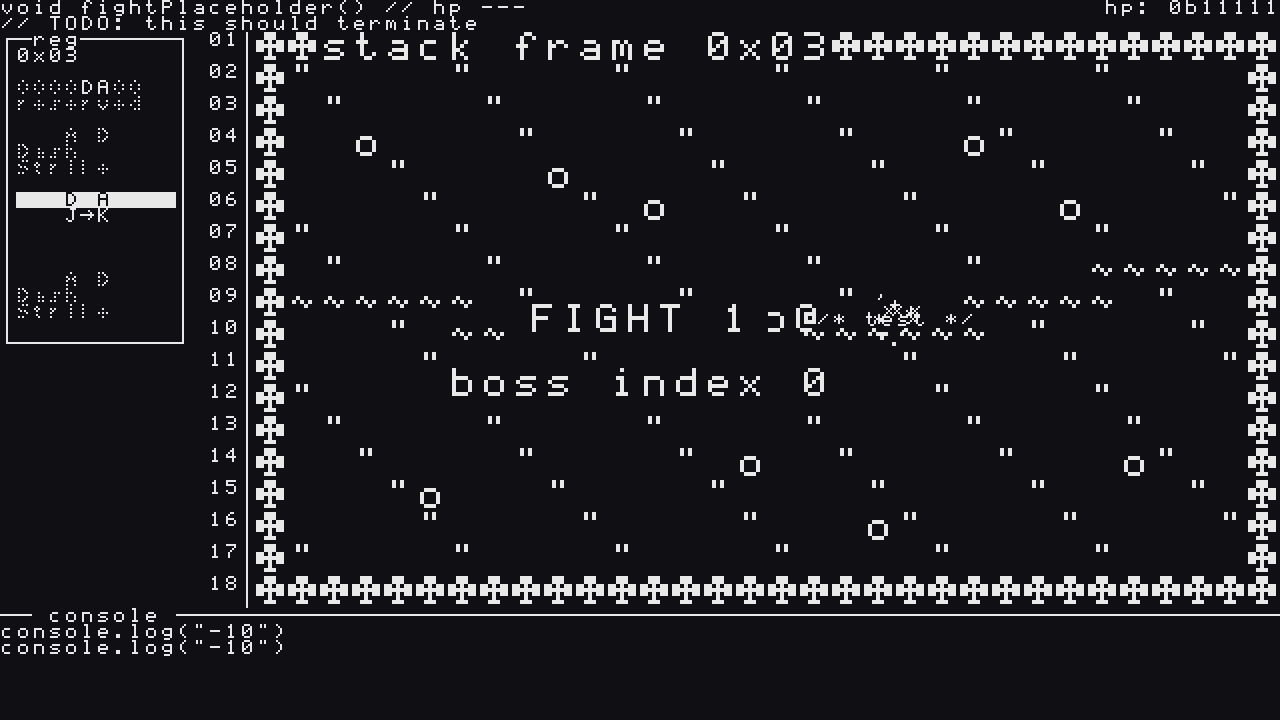
The 3-hit slash chain on the practice target: glyph particles and damage logged to the console.
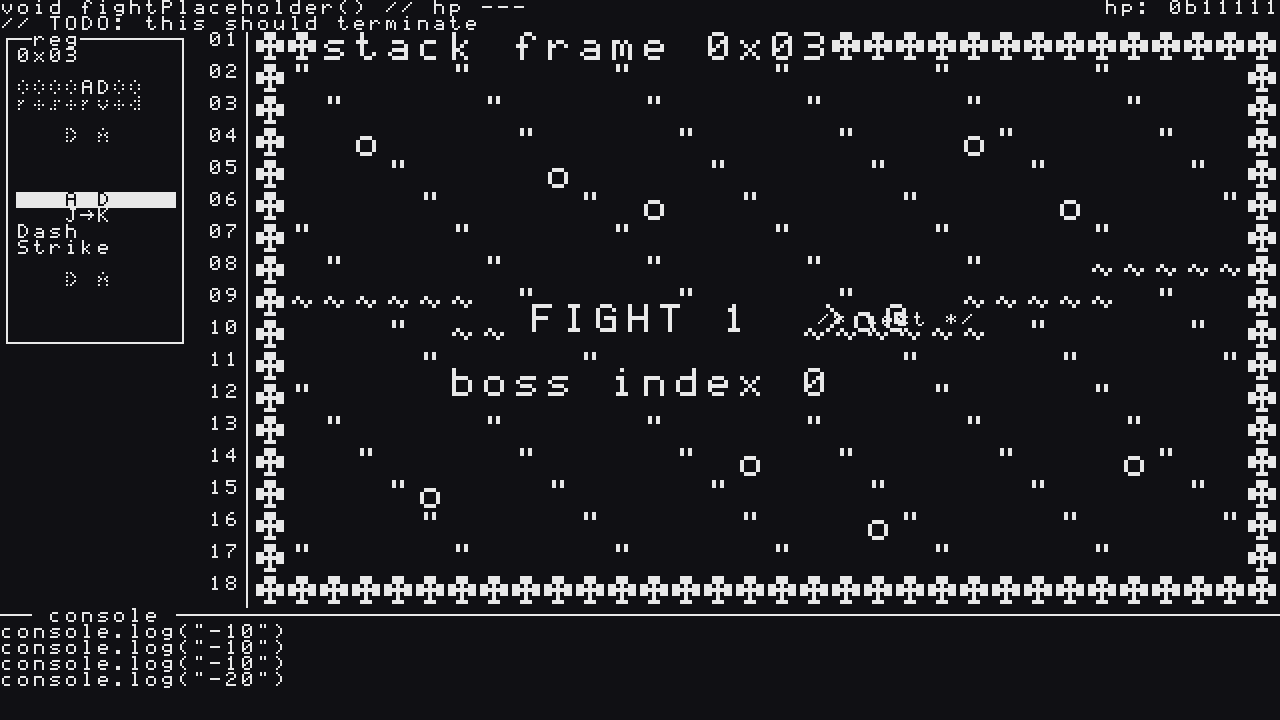
After one << the active window is [A, D]: J→K fires a Dash Strike.
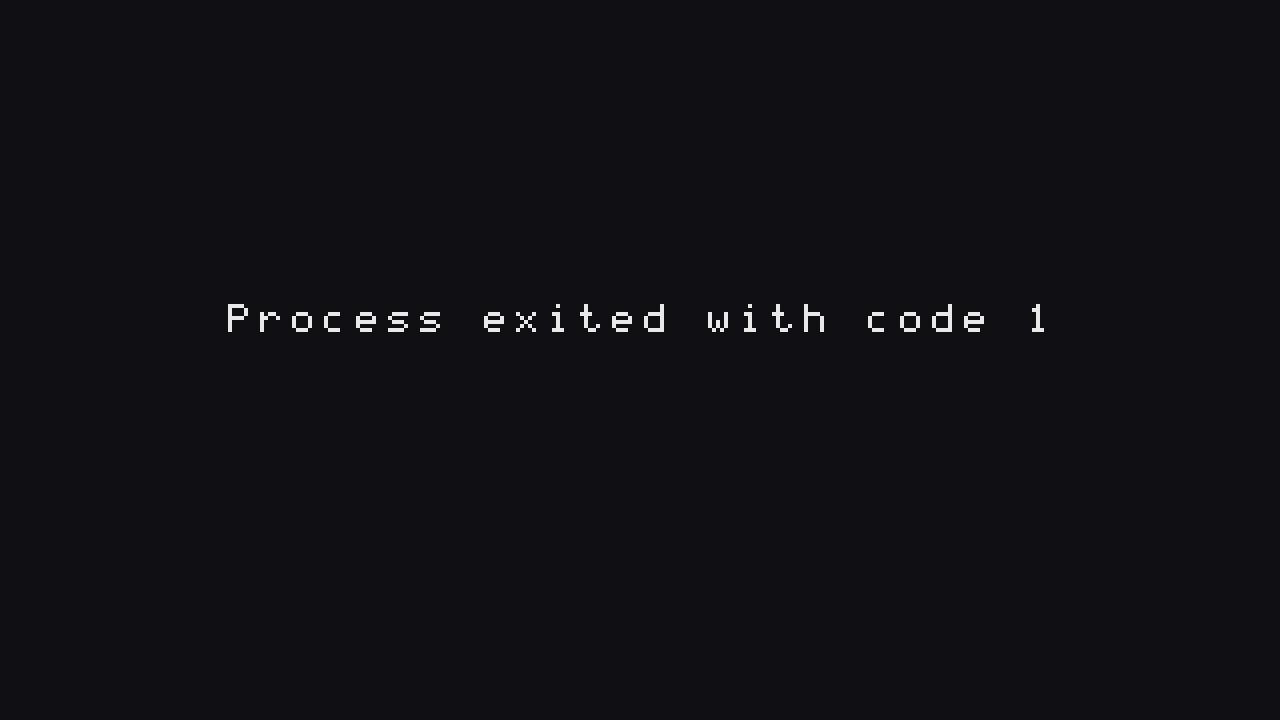
- Death and retry: you have 5 HP, shown as
0b11111. When you die you getProcess exited with code 1, and one key puts you back at the start of the fight in under 2 seconds. - A practice target:
/* test */, with infinite HP and a frame counter, so I can check the combo numbers on screen.
Under the hood the whole simulation is deterministic: it runs on a fixed 60 Hz clock, with seeded randomness and recorded input replays. That means a bug I find while playing can be replayed exactly in a test.
(The “FIGHT 1 / boss index 0” text in the screenshots is a placeholder: the arena is still waiting for its first boss.)
How it’s made
I’m making this solo, as director and playtester. The code is written by AI agents (Claude), following specs I write and approve with the BMAD Method, the same workflow I described in BMAD, end to end: game brief → GDD → architecture → one spec per story. Every story is a pull request with code review and automated tests (55 test files by the end of Epic 2). All the design docs are public in the GitHub repo.
Next up
The first real bug: Infinite Loop, a snake made of code that repeats its attacks… until you find its weak window. Plus the rubber duck, who finally gets a voice, powered by mumble-speech, my own library: v0.3.0 added Godot web support, so the duck can talk in the browser too.
Thanks for reading!